

Reinsurance Outlook in Latin America: Capacity, the Protection Gap and Emerging Risks
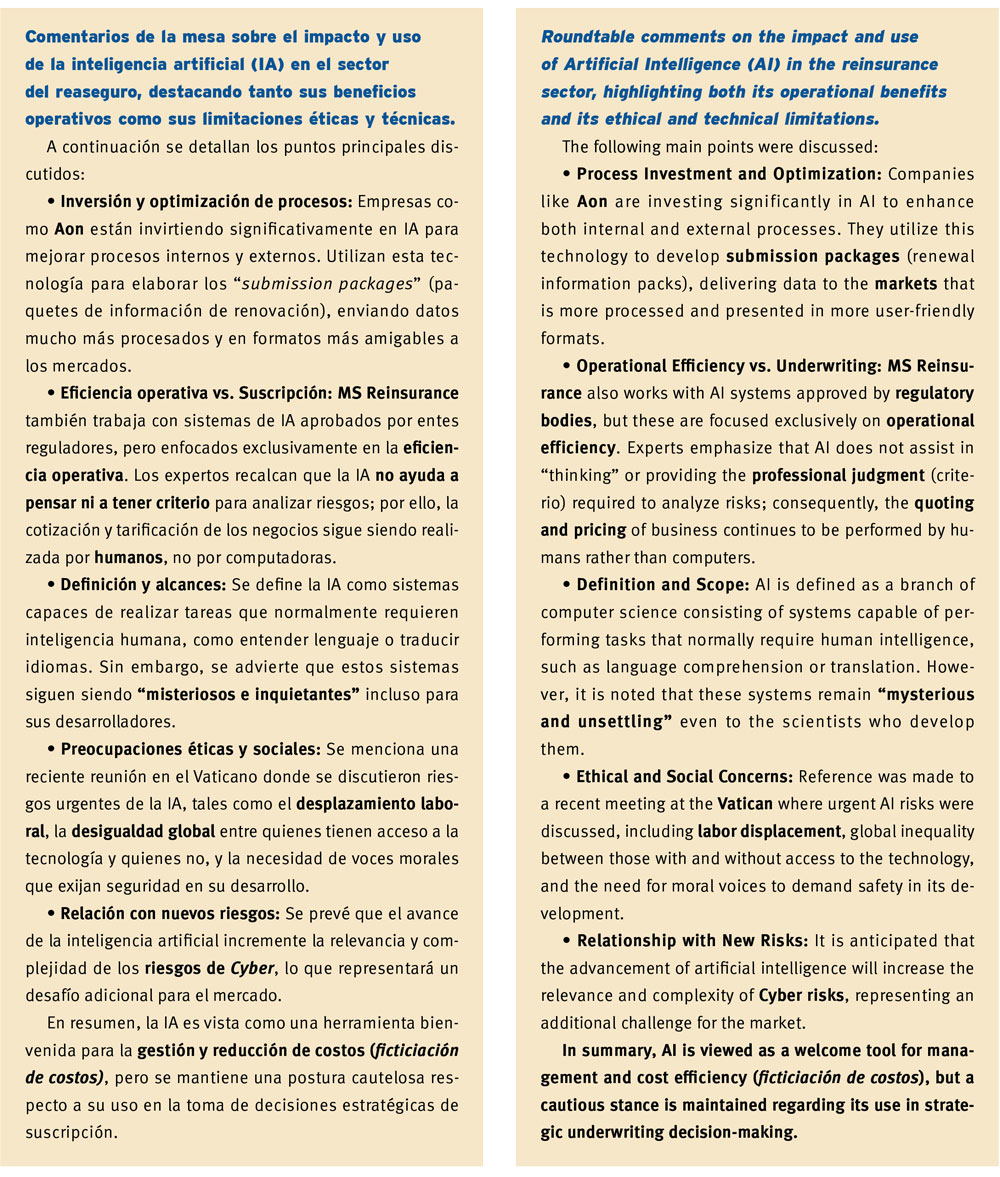
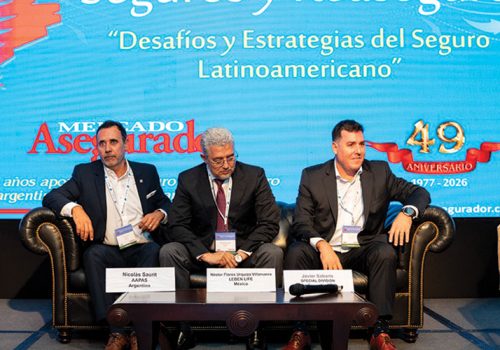
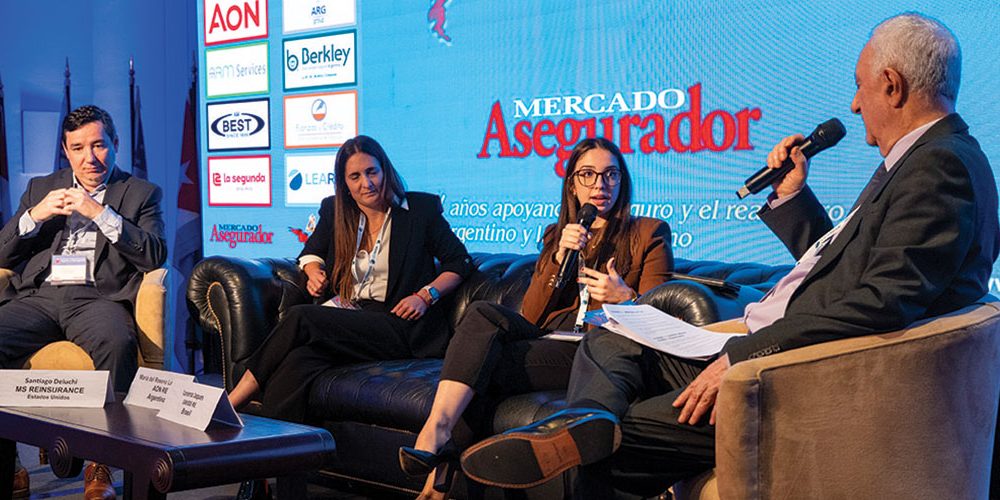
En el marco del 12vo Seminario Latinoamericano de Seguros y Reaseguros, Pedro Zournadjian, Director de la revista Mercado Asegurador, moderó una mesa redonda sobre el panorama del reaseguro en América Latina, con la participación de Lorena Jaques, Senior Client Underwriter de Swiss Re; Santiago Deluchi, Responsable de los Mercados del Cono Sur de MS Reinsurance; y María del Rosario Lanouguere, Regional Treaty Director (AON RE). El intercambio abordó el renovado apetito de capacidad reaseguradora hacia la región y los factores que explican el mayor interés internacional en el riesgo local; la persistencia de la brecha de protección y el infraseguro como desafío estructural del mercado latinoamericano; y los criterios técnicos que definen la elección entre esquemas proporcionales y no proporcionales. El panel también analizó los riesgos emergentes que demandan mayor atención y el impacto de la IA en el reaseguro.
At the 12th Latin American Insurance and Reinsurance Seminar, Pedro Zournadjian, Editor of Mercado Asegurador Magazine, moderated a roundtable on the reinsurance outlook in Latin America, with Lorena Jaques, Senior Client Underwriter at Swiss Re; Santiago Deluchi, Head of Southern Cone Markets at MS Reinsurance; and María del Rosario Lanouguere, Regional Treaty Director at AON RE. The discussion covered the renewed appetite for reinsurance capacity toward the region and the factors driving greater international interest in local risk; the persistence of the protection gap and underinsurance as a structural challenge across Latin American markets; and the technical criteria behind the choice between proportional, non-proportional treaty structures. The panel also examined the emerging risks that require greater attention and the impact of AI on the reinsurance industry.
Los Grandes Ejes del Debate Reasegurador en América Latina por Pedro Zournadjian
Como moderador, Pedro Zournadjian planteó la agenda en torno a cuatro ejes: el renovado apetito internacional de capacidad reaseguradora hacia la región, la persistencia de la brecha de protección y el infraseguro, los criterios técnicos detrás de la elección entre esquemas proporcionales y no proporcionales, y la creciente exposición a riesgos catastróficos no modelados, cibernéticos y de grandes proyectos de infraestructura minero-energética en el marco del avance de la IA en el mercado de reaseguros.
A mitad de la sesión, Zournadjian aportó además una perspectiva histórica propia sobre el Seguro de Transporte, recordando que esta línea -junto con el Seguro de Incendio- constituyó durante décadas una de las de mayor peso relativo del mercado, antes del crecimiento del Automotor y de la Responsabilidad Civil. Señaló que el Seguro de Transporte, en el pasado, sufrió una fuerte contracción por la siniestralidad asociada a la piratería del transporte terrestre y a pérdidas portuarias y aduaneras, lo que llevó a colocar buena parte de las coberturas de transporte marítimo en el exterior, y que la posterior estandarización mediante contenedores, junto con mayores inversiones en seguridad, mejoró sustancialmente el perfil de riesgo.
Destacó la renovada relevancia estratégica de esta línea a la luz de la tensión geopolítica en el Estrecho de Ormuz y del transporte de bienes de capital vinculados a grandes obras de infraestructura -turbinas y equipos especiales, habitualmente colocados bajo pólizas facultativas-, utilizando esa observación como puente hacia el intercambio del panel sobre el ciclo de inversión minero-energético en Argentina.
Introducción: Un Mercado que Recupera Atractivo para el Reaseguro Internacional
Pedro Zournadjian: Empecemos por el renovado apetito de capacidad reasegurador hacia la región. Estimado Santiago, ¿qué explica el mayor interés internacional en el riesgo argentino en este momento?
Santiago Deluchi (MS Reinsurance): El mercado argentino ha recuperado atractivo para reaseguradores que, hasta hace poco, mantenían una posición más distante o de capacidad limitada. Esta mayor afluencia de oferta va a permitir a las aseguradoras cedentes negociar en mejores condiciones y, eventualmente, optimizar la calidad de sus paneles de reaseguradores. Ahora bien, son pocos los mercados que cotizan de manera activa y sostenida el riesgo argentino en particular, a diferencia de otros players que participan de las colocaciones sin sostener una política de suscripción continua sobre la plaza local. MS Reinsurance ha mantenido una política de suscripción inalterada durante la última década, cotizando tanto en ciclos económicos adversos como favorables. Ese compromiso de largo plazo con la región -a diferencia de actores que solo se activan en la fase de colocación cuando el ciclo es favorable- constituye un elemento diferencial de cara a la actual renovación de contratos, en un contexto donde la gestión sostenida del suscriptor pesa tanto como la capacidad ofrecida.
La Brecha de Protección y el Infraseguro como Desafío Estructural
Pedro Zournadjian: Estimada Lorena, pasemos a la denominada protectiongap. ¿Qué explica el infraseguro en la región?
Lorena Jaques (Swiss Re): La insuficiente penetración del seguro en América Latina -con tasas de penetración cercanas al 3%, lo que implica una brecha del orden del 97%- es una asignatura pendiente que trasciende la preocupación por el riesgo catastrófico a nivel gubernamental. Más allá de esa brecha macro, existe una brecha por asegurado y por empresa: situaciones de infraseguro en las que el tomador cubre solo una fracción del bien o de la actividad, dejando el remanente bajo autoseguro no declarado. Atribuyo el fenómeno predominantemente a una cuestión cultural: la falta de conversación social en torno al seguro y la percepción generalizada de la prima como un costo evitable antes que como una inversión de protección patrimonial. Rio Grande do Sul en 2024 es un ejemplo claro: solo el 7% de las pérdidas estaban adecuadamente aseguradas. Le corresponde a la industria asumir la responsabilidad de democratizar el conocimiento técnico del seguro para revertir esa brecha.
Pedro Zournadjian: Estimada María del Rosario, ¿cuál es la mirada del bróker sobre este mismo fenómeno?
María del Rosario Lanouguere (AON RE): Coincido en el componente cultural. Vemos clientes que contratan pólizas sin comprender el alcance real de su cobertura ni la suma asegurada frente al valor de reposición de sus bienes. En contextos de crisis macroeconómica, el seguro suele ser de los primeros gastos que las familias recortan, lo cual erosiona la cobertura justo antes de la ocurrencia de eventos catastróficos. Hay además una cuota de responsabilidad de las propias aseguradoras y productores, que en ocasiones no dedican el tiempo suficiente a la etapa de suscripción o a la comprensión integral del riesgo del cliente.
Santiago Deluchi (MS Reinsurance): Yo lo pienso en dos universos distintos: la baja penetración del seguro por un lado, y el infraseguro o insuficiencia de cobertura por otro. Ese segundo fenómeno se explica por un asesoramiento de suscripción deficiente, decisiones de ahorro de prima por parte del asegurado, y la volatilidad cambiaria, que desactualiza rápidamente los valores asegurados cuando no existe una política activa de ajuste de sumas aseguradas.
Contratos Proporcionales y No Proporcionales: La Decisión de Estructura de Reaseguro
Pedro Zournadjian: ¿Quién define, en la práctica, la elección entre reaseguro proporcional y no proporcional?
María del Rosario Lanouguere (AON RE): El rol del bróker es esencialmente de asesoramiento técnico, aun cuando la tendencia en líneas como automotor se orienta hacia esquemas no proporcionales. La decisión final recae siempre en la compañía cedente, en función de la estructura que mejor se adecue a su balance, a su posición de capital y a sus objetivos de protección, dentro de los principios rectores de la función reaseguradora: transferencia efectiva de riesgo, adecuada percepción del riesgo por parte del cedente y suficiencia de cobertura.
Lorena Jaques (Swiss Re): Desde la perspectiva del reasegurador, coincido en que la decisión estructural corresponde al cliente. Pero la transparencia y la comunicación fluida con el bróker son esenciales, dado que los apetitos de suscripción varían según la estructura del contrato y la línea de negocio involucrada, especialmente en la etapa de negociación.
Santiago Deluchi (MS Reinsurance): Confirmo ese consenso. El peso del corredor es particularmente relevante en aseguradoras cedentes que no cuentan con un departamento de reaseguro desarrollado, donde el reasegurador suele operar en un rol más expectante, limitándose a cotizar sobre la estructura definida por la cedente o, eventualmente, sugiriendo alternativas más aconsejables para su cartera, sin que ello desplace la decisión final del lado del tomador de la cesión.
Riesgos Catastróficos No Modelados y el Desafío del Riesgo Cibernético
Pedro Zournadjian: ¿Qué riesgos emergentes consideras que deben monitorearse hacia adelante?
Santiago Deluchi (MS Reinsurance): Hay que distinguir entre el riesgo catastrófico actual -insuficientemente modelado en mercados como el argentino, donde no existen modelos que aproximen con precisión la pérdida esperada frente a los eventos posibles- y los riesgos de exposición aún latente y de escasa conciencia aseguradora. Entre estos últimos, el riesgo cibernético es el más relevante.”
Pedro Zournadjian: Esa perspectiva histórica que mencioné sobre el Seguro de Transporte me lleva al ciclo de inversión actual. ¿Cómo se conecta esto con la minería y la energía en Argentina?
Santiago Deluchi (MS Reinsurance): Vinculo esta proyección con el ciclo de inversión público-privada esperado en minería y energía en Argentina, señalando los desafíos logísticos específicos del transporte de litio -condiciones de altura e infraestructura vial limitada- como un vector de crecimiento para transporte, vida y ciberriesgo. Sobre este último, la oferta se ha concentrado históricamente en grandes corporaciones, y el desafío consiste en extender la cobertura a pymes y personas físicas, lo cual va a requerir un marco jurídico y regulatorio más robusto, en un contexto donde la adopción de inteligencia artificial va a intensificar aún más la exposición cibernética.
Cierre: Riesgo Catastrófico Vigente y Perspectivas de Crecimiento Regional
Pedro Zournadjian: Para cerrar, ¿cómo ven el futuro del negocio ante los acontecimientos actuales: de manera positiva o compleja?
Santiago Deluchi (MS Reinsurance): Advierto sobre el riesgo de concentrar la atención exclusivamente en la prospectiva de largo plazo, sin descuidar la volatilidad y la frecuencia siniestral catastrófica ya observada en Argentina, Brasil, Uruguay y Paraguay. Aseguradoras y reaseguradores necesitan fortalecer sus bases de datos y el control de cúmulos. Un informe reciente del sector indica que cerca del 97% de las pérdidas del último año correspondieron a peligros no modelados en la esfera catastrófica, y un evento significativo no requiere necesariamente afectar a una gran ciudad para generar un impacto relevante sobre la industria aseguradora. Argentina, si bien fue históricamente considerada de bajo riesgo catastrófico natural, presenta una singularidad regional en materia de “catástrofes judiciales” -vinculadas a la litigiosidad- que no se replica en igual magnitud en otros mercados de la región.
El panel concluyó con una perspectiva de crecimiento sostenido para el negocio asegurador y reasegurador en toda América Latina, dando cierre a la primera jornada del seminario.
The Key Themes of the Reinsurance Debate in Latin America by Pedro Zournadjian
As moderator, Pedro Zournadjian framed the discussion around four key themes: the renewed international appetite for reinsurance capacity in the region; the persistent protection gap and underinsurance; the technical considerations underpinning the choice between proportional and non-proportional reinsurance structures; and the growing exposure to unmodeled catastrophe risks, cyber risks, and major mining and energy infrastructure projects, within the context of the advancing role of AI in the reinsurance market.
Midway through the session, Zournadjian also offered a historical perspective on marine cargo insurance, recalling that this line of business -together with fire insurance- represented one of the largest segments of the insurance market for decades, prior to the expansion of motor and liability insurance. He noted that cargo insurance experienced in the past a significant contraction as a result of the high loss activity associated with cargo theft in inland transit, as well as port and customs losses, leading a substantial share of ocean marine risks to be placed in international markets. He further explained that the subsequent standardization of containerized transport, combined with greater investment in security, significantly improved the line’s risk profile.
Zournadjian also underscored the renewed strategic importance of cargo insurance in light of the geopolitical tensions in the Strait of Hormuz and the transportation of capital goods for major infrastructure projects -such as turbines and specialized equipment, which are typically placed in the facultative reinsurance market-using this observation as a bridge to the panel discussion on Argentina’s mining and energy investment cycle.
Introduction: A Market Regaining Attractiveness for International Reinsurance
Pedro Zournadjian: Let’s start with the renewed appetite for reinsurance capacity toward the region. Santiago, what’s driving greater international interest in Argentine risk right now?
Santiago Deluchi (MS Reinsurance): The Argentine market has regained attractiveness for reinsurers that, until recently, kept a more distant stance or offered only limited capacity. This greater inflow of supply will let ceding companies negotiate on better terms and, eventually, optimize the quality of their reinsurer panels. That said, few markets actively and consistently quote Argentine risk in particular -unlike other players who participate in placements without sustaining a continuous underwriting policy on the local market. MS Reinsurance has kept an unchanged underwriting policy over the past decade, quoting through both adverse and favorable economic cycles. That long-term commitment to the region – unlike players who only become active at the placement stage when the cycle turns favorable – is a differentiating factor in the current treaty renewal, in a context where sustained underwriting management carries as much weight as the capacity offered.
The Protection Gap and Underinsurance as a Structural Challenge
Pedro Zournadjian: DearLorena, let’s turn to the so-called protection gap. What’s behind underinsurance in the region?
Lorena Jaques (Swiss Re): Insufficient insurance penetration in Latin America – with penetration rates near 3%, implying a gap on the order of 97% – is an outstanding issue that goes beyond concerns over catastrophic risk at the government level. Beyond that macro-level gap, there’s also a gap at the policyholder level and at the corporate level: situations of underinsurance where the insured covers only a fraction of the asset or activity, leaving the remainder as undeclared self-insurance. I’d attribute the phenomenon primarily to cultural factors -the lack of social conversation around insurance, and the widespread perception of the premium as an avoidable cost rather than an investment in asset protection. Rio Grande do Sul in 2024 is a clear example: only 7% of losses were adequately insured. It’s the industry’s responsibility to democratize technical insurance knowledge in order to close that protection gap.
Pedro Zournadjian: Dear María del Rosario, what’s the broker’s perspective on this same issue?
María del Rosario Lanouguere (AON RE): I agree on the cultural component. We see clients who purchase policies without understanding the actual scope of their coverage or the sum insured relative to the replacement value of their assets. In periods of macroeconomic crisis, insurance is often among the first expenses households cut, which erodes coverage right before catastrophic events occur. There’s also a share of responsibility on the part of insurers and producers themselves, who at times don’t devote sufficient time to the underwriting stage or to fully understanding the client’s risk.
Santiago Deluchi (MS Reinsurance): I’d frame it as two distinct universes: low insurance penetration on one hand, and underinsurance or inadequate coverage on the other. That second phenomenon comes down to deficient underwriting advice, premium-saving decisions on the part of the insured, and currency volatility, which quickly renders insured values outdated when there’s no active policy for adjusting sums insured.
Proportional and Non-Proportional Treaties: Deciding the Reinsurance Structure
Pedro Zournadjian: Who, in practice, decides between proportional and non-proportional reinsurance?
María del Rosario Lanouguere (AON RE): The broker’s role is essentially technical advisory, even as the trend in lines like motor shifts toward non-proportional structures. The final decision always rests with the ceding company, based on the structure that best fits its balance sheet, its capital position and its protection objectives – within the guiding principles of the reinsurance function: effective risk transfer, adequate risk perception on the part of the cedant, and sufficiency of coverage.
Lorena Jaques (Swiss Re): From the reinsurer’s side, I agree the structural decision belongs to the client. But transparency and fluid communication with the broker are essential, since underwriting appetite varies according to treaty structure and line of business – particularly at the negotiation stage.
Santiago Deluchi (MS Reinsurance): That’s the consensus. The broker’s weight is particularly significant for ceding companies without a developed reinsurance department, where the reinsurer tends to play a more responsive role – generally quoting on the structure the cedant has defined or, at times, suggesting alternatives better suited to its portfolio, without that displacing the final decision from the ceding company.
Non-Modeled Catastrophic Risk and the Cyber Risk Challenge
Pedro Zournadjian: What emerging risks do you think should be monitored going forward?
Santiago Deluchi (MS Reinsurance): We need to distinguish between current catastrophic risk -insufficiently modeled in markets like Argentina, where no models exist that accurately approximate expected loss against possible events- and risks of exposure that remain latent and still carry limited underwriting awareness. Among the latter, cyber risk is the most significant.
Pedro Zournadjian: That historical arc I mentioned on cargo and transport brings me to today’s investment cycle. How does this connect to mining and energy in Argentina?
Santiago Deluchi (MS Reinsurance): “I’d link this outlook to the expected public-private investment cycle in mining and energy in Argentina – pointing to the specific logistical challenges of lithium transport, high-altitude conditions and limited road infrastructure, as a growth driver for transport, life and cyber risk. On the cyber side, supply has historically been concentrated on large corporations, and the challenge is extending coverage to SMEs and individuals, which will require a more robust legal and regulatory framework – in a context where the adoption of artificial intelligence will further intensify cyber exposure.
Closing: Present-Day Catastrophic Risk and Regional Growth Prospects
Pedro Zournadjian: To close, how do you see the future of the business in light of current events – positively, or with concern?
Santiago Deluchi (MS Reinsurance): I’d warn against focusing exclusively on the long-term outlook while neglecting the volatility and catastrophic claims frequency already observed in Argentina, Brazil, Uruguay and Paraguay. Insurers and reinsurers need to strengthen their databases and aggregate-exposure controls. A recent industry report indicates that close to 97% of last year’s losses corresponded to non-modeled perils within the catastrophic sphere, and a significant event doesn’t necessarily need to affect a major city to have a material impact on the insurance industry. Argentina, while historically regarded as low-risk in terms of natural catastrophic exposure, presents a regional peculiarity in terms of “judicial catastrophes” -linked to litigiousness- not replicated to the same degree in other markets in the region.
The panel concluded with an outlook of sustained growth for the insurance and reinsurance business across Latin America, bringing the first day of the seminar to a close.